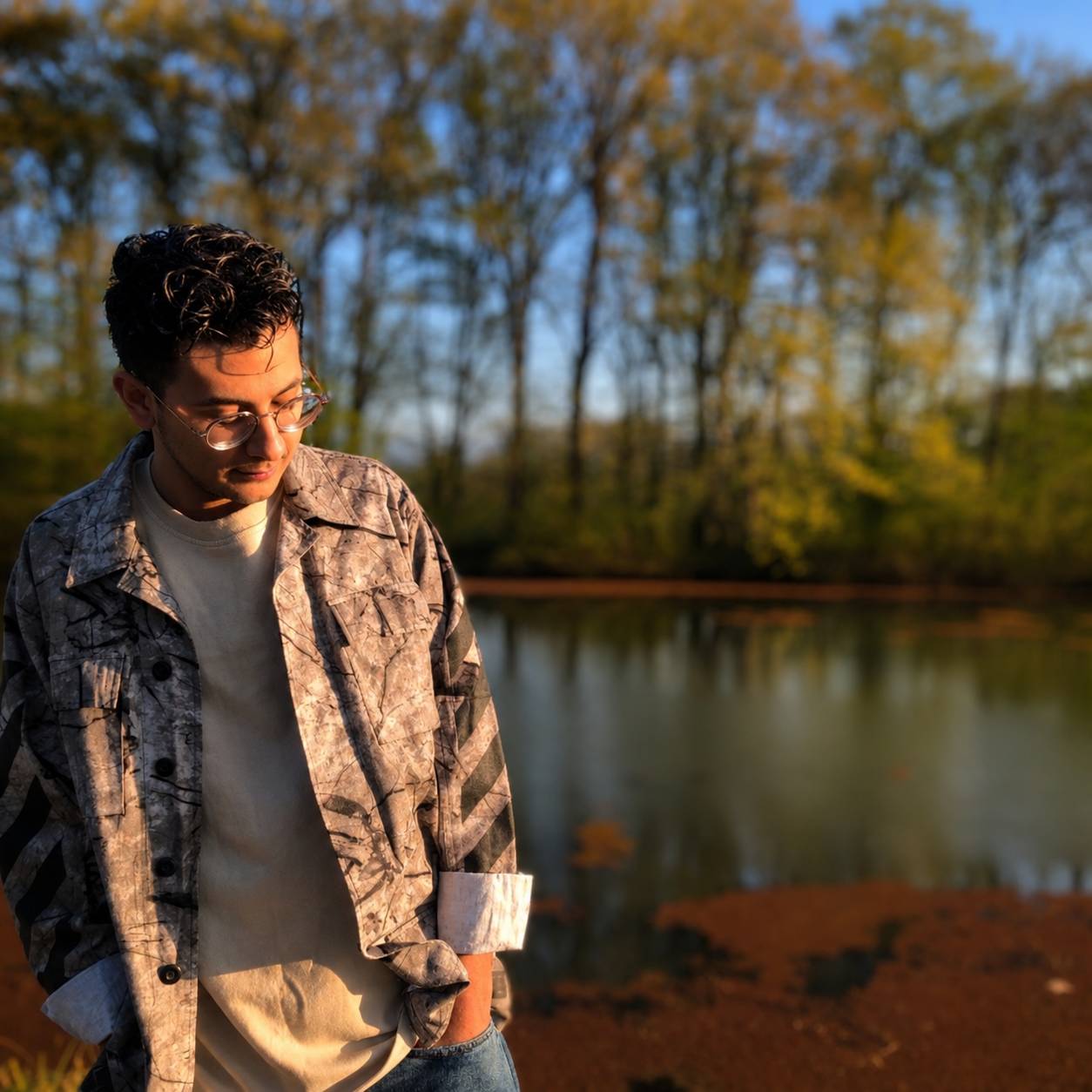
A self-taught Machine Learning & Deep Learning engineer focused on modular pipelines, reproducible workflows, and clean architecture across ANNs, CNNs, and scalable ML systems.
I'm Arian Jafar, a self-taught Machine Learning and Deep Learning enthusiast passionate about building intelligent, modular systems with clean architecture and reproducible workflows. My primary interests include Computer Vision, Artificial Neural Networks (ANNs), Convolutional Neural Networks (CNNs), and scalable machine learning pipelines.
I have hands-on experience developing end-to-end AI solutions using Python, TensorFlow, Keras, and Scikit-learn, with a strong focus on writing clean, maintainable code and following professional Git workflows. Every project is designed to be reproducible, well-documented, and production-minded—not just functional.
I'm continuously expanding my expertise through hands-on projects and continuous learning, always striving to build AI systems that deliver meaningful real-world impact while adhering to software engineering best practices.
End-to-end machine learning pipeline for detecting fraudulent credit card transactions. Includes data exploration, preprocessing, SMOTE for class imbalance, model comparison (Logistic Regression, Random Forest, XGBoost), cross-validation, and evaluation using ROC-AUC and Precision-Recall AUC.
Benchmarks CNN vs. transfer-learning models (ResNet50, MobileNetV2, EfficientNetB0) for image-based waste classification, with confusion matrices and visual diagnostics.
End-to-end pipeline for fraud detection with EDA, SMOTE for class imbalance, and model comparison across Logistic Regression, Random Forest, and XGBoost, evaluated on ROC-AUC.
Deep learning pipeline classifying chest X-rays into COVID-19, pneumonia, and normal cases with a custom CNN, including augmentation and visual evaluation metrics.
Time-series forecasting of Google (GOOGL) stock prices using LSTM networks, covering preprocessing, sequence generation, and performance evaluation.
Deep learning pipeline analyzing academic performance, spanning EDA, preprocessing, regression, classification, and evaluation with TensorFlow/Keras.
Predicts cancer likelihood from patient health data using classical ML classifiers, with data cleaning, EDA, and model evaluation.